
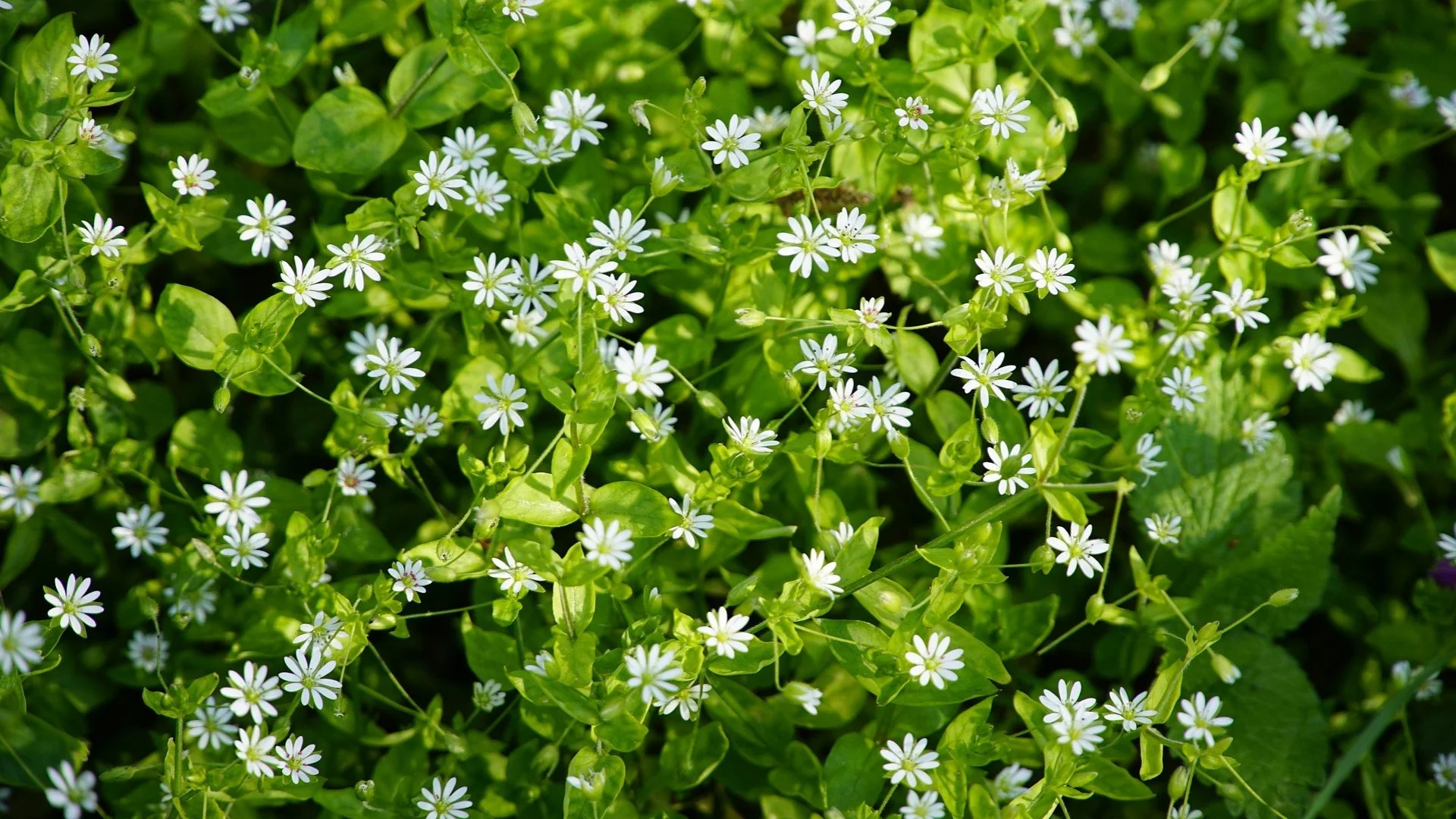
During the winter, your lawn in Oregon becomes vulnerable to various winter weeds. Chickweed is a common winter weed that forms dense mats and can quickly overtake your lawn, competing with your grass for nutrients and sunlight. Henbit is another winter weed that can cause issues for your lawn. It has square stems and small purple flowers, and it can quickly spread and take over your lawn if left unchecked. Hairy bittercress is a winter weed that can quickly spread and take over your lawn. It has small white flowers and can grow up to 12 inches tall. All of these winter weeds can cause issues for your lawn, but by implementing proper weed control measures, you can keep them at bay and maintain a healthy and beautiful lawn.
Chickweed is a winter weed that can cause issues for your lawn.
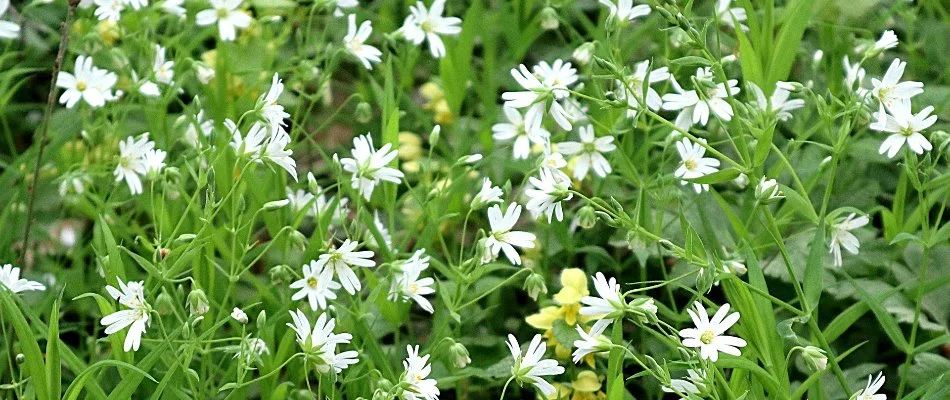
Chickweed is one of the most common winter annual weeds you’ll find in lawns in Oregon. It germinates in the fall, thrives through the cool months, and often sticks around until late spring if not addressed. This weed is easy to identify with its small, star-like white flowers and smooth, oval leaves that grow opposite each other along the stem. Chickweed stays low to the ground and quickly forms sprawling mats that smother grass by blocking light and stealing nutrients. Its rapid growth makes it especially troublesome in lawns with compacted soil or poor drainage, where grass struggles to compete. Because chickweed can spread so quickly, it’s best managed before it gets established.
Henbit is a winter weed that can quickly spread and take over your lawn.
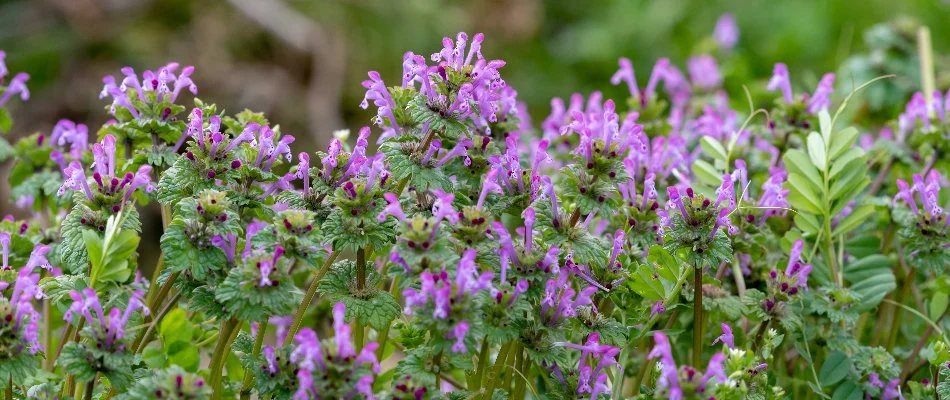
Henbit is another winter annual weed that can take over lawns in Oregon during the cooler seasons. Unlike chickweed, henbit often grows more upright, with square stems, scalloped leaves, and clusters of small purple flowers that bloom in early spring. Its unique structure allows it to spread outward while also standing tall enough to shade desirable turf. Henbit prefers moist, fertile soil and tends to thrive in areas where grass is thin or stressed. Left unchecked, it can spread rapidly across lawns and landscape beds, competing for space, sunlight, and nutrients. Because henbit reseeds itself easily, even one season of neglect can lead to a much larger infestation the following year. Keeping it under control requires addressing it early in its growth cycle before it has a chance to flower and produce seed.
Hairy bittercress is a winter weed that can quickly spread and take over your lawn.
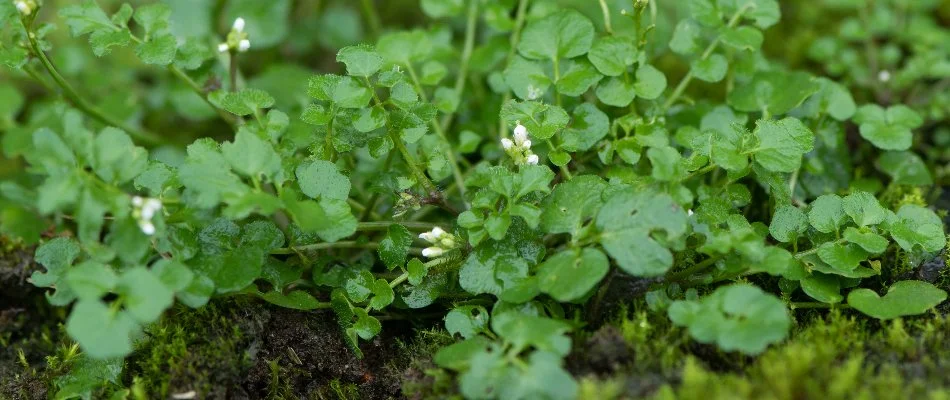
Hairy bittercress is a winter annual found in Oregon that begins as a basal rosette of lobed leaves close to the ground. As it matures, it sends up slender stems topped with small, white, four-petaled flowers. One of the most frustrating traits of this weed is its ability to disperse seeds explosively; a single touch to a seed pod can send seeds scattering several feet away, allowing it to spread quickly across lawns and beds. Bittercress thrives in cool, damp conditions, particularly in lawns that are thin, stressed, or compacted. Once it takes hold, it competes aggressively with grass for moisture and nutrients, and its rapid seed production can turn a small patch into a widespread problem by the following season. Effective control depends on stopping it before it sets seed, as those seeds can remain viable in the soil for years.
Give us a call today to schedule our weed control service.
At J&C Lawn Care, we offer a weed control service that includes multiple treatments to effectively control weeds in your lawn. Our team of professionals will visit your property multiple times throughout the year to ensure your lawn remains weed-free. Our weed control service is offered to property owners in Gresham, Happy Valley, Troutdale, and surrounding areas in Oregon. Give us a call today at (971) 284-2035 to schedule our weed control service and keep your lawn looking its best!

Comments (0)
Thanks for your comment!
Thanks for your feedback! Your comments have been successfully submitted! Please note, all comments require admin approval prior to display.
Error submitting comment!
There is a problem with your comment, please see below and try again.